Hi, a wonderful creature! You are reading the seventh monthly edition of my newsletter. These newsletters are in the format of thought of the time + digest of articles about leadership in engineering teams and interviews with experienced engineers and leaders. Happy reading, watching, and listening 😊!
This time I will talk about my experience of doing audits in the electronics manufacturing industry.
Intro
I have jumped into the audit world back when I was working at Ericsson . The goal at that time was to rebuild a global community of internal auditors, and I was among the first ones to start. It was not meant to be a full-time position but a part-time role.
Nevertheless, I went through the Lead Auditor's training and certification for ISO9001, ISO27001, IPC-A-610, J-STD-001 and CE-marking. Since then, I have taken part in various audits in the electronics manufacturing industry as an auditee, observer, auditor, and then eventually, as lead auditor. I had experience with remote, on-site and hybrid audits in various countries such as Estonia, the USA, India, Hungary, etc.
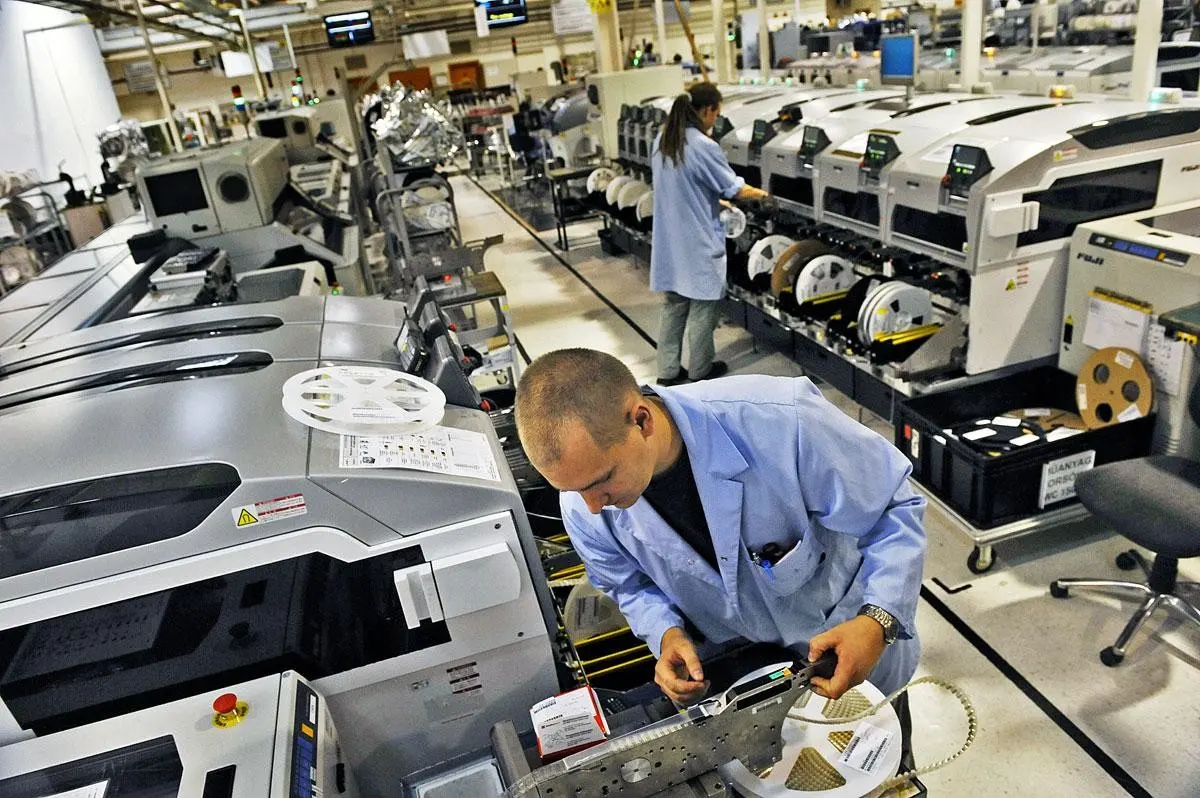
I have seen good and bad audits and trained several to-be auditors. One of the greatest experiences I had was my audit of the Jabil factory in Hungary (in Tiszaújváros also known as T-town) where I was inspecting Ericsson production lines. There I was leading a team of auditors and observers from Estonia and Sweden. Special thanks to Julia Vuhk Vuht and Frances Zhang for preparing me, and to auditors - Bruno Velásquez Leiva , Aleksei Nikiforov , and Mariliis Leitud .
Why one of the greatest? Because there I applied lots of my knowledge and experience on how an audit should be done. It was a complex audit as before the last audit was only about 8 years ago and a partial one, and thus, we had to audit the whole production starting from the warehouse and ending with IT security implementation. Besides, there I had to manage a team of 3 auditors and 2 observers on-site, and 10 observers remotely, with 2 parallel audit tracks.
Thus, most of my lessons learned on how to do an audit I will share based on that experience and from the perspective of the lead auditor.
Do not underestimate the importance of planning

- The first thing to do is to set the scope of the audit and align with the auditee on the dates. You should start agreeing on dates several months before. Ideally, 6 months before and the best time to conduct audits is in April-May or September-November. All other times, there is a high probability of having bad availability due to vacations.
- Priority is to fix dates with the auditee and then only start building a team and checking the availability of members.
- It is common sense that team members need to have relevant experience. However, it also depends on your experience and the complexity of the audit. For instance, you do not need a very experienced team if you do an audit in a sequence (topic by topic) and for max 3 days.
- Next, make sure you divide responsibilities. Normally, you take topics in scope and split them among auditors. I was once in an audit where the lead auditor skipped this step. As a result, virtually everything was done by the lead auditor and I did not have much to contribute to the final report. This lead auditor was extremely overwhelmed by the volume of work eventually.
- Once responsibilities are split, each auditor should take responsibility for creating a list of questions in the form of a checklist and connected to specific clauses of internal quality management system documentation or ISO standards.
- Finally, create an elaborate but simple-to-follow schedule (Excel is fine). You will share it with your team as well as with auditees. Make sure to plan for breaks at least after each hour. You need to reserve at least 1 hour at the end of the day for internal discussion with your team and at least 30 minutes for a closing meeting.
- Make sure that each day of the audit you start with the opening meeting and closing meeting. That is besides that you will have general opening and final closing meetings for the entire audit.
- If you have observers connecting remotely, then make sure to include into the schedule time zone difference.
- Include slack time for each topic. You never know how it will go. Some topics might go faster, some topics will get stuck as you might sense some finding to report.
- Follow strictly your schedule and make sure everyone respects it. If you mess up your schedule, you will compromise on your scope. Either way, your authority to report non-conformity will be questioned as you yourself was non-conformant towards your schedule or scope.
Set rules within your team to be efficient

- Make sure that the team understands that the lead auditor orchestrates everything. Lead auditor controls who and when speaks among auditors.
- No arguing is allowed with the lead auditor or between auditors in front of auditees.
- Do not let observers talk during an audit. Use internal chat for quick sync with auditors and observers. I have seen audits where observers were allowed even to ask questions to the auditee. Do not do that, otherwise, it will be a mess and damage your schedule and flow. Keep in mind, that observers do not have enough experience to be auditors, and thus, should learn by observing audits.
- Make sure to get to know your team on a personal level before the audit. During the audit, make sure to have dinners together and further connect on a personal level.
Execute smoothly
- Give lead to auditors in sections where you agreed they will take responsibility. For instance, to be the main person to ask questions for own topic.
- Classify major non-conformity (NC) and minor NC last day of the audit. Do not waste time on classification during an audit.
- However, be fast to share your observations with the auditee. Just share as an observation. Do not argue whether is non-conformity or not. This way, you have more options for validation of whether it is a non-conformity.
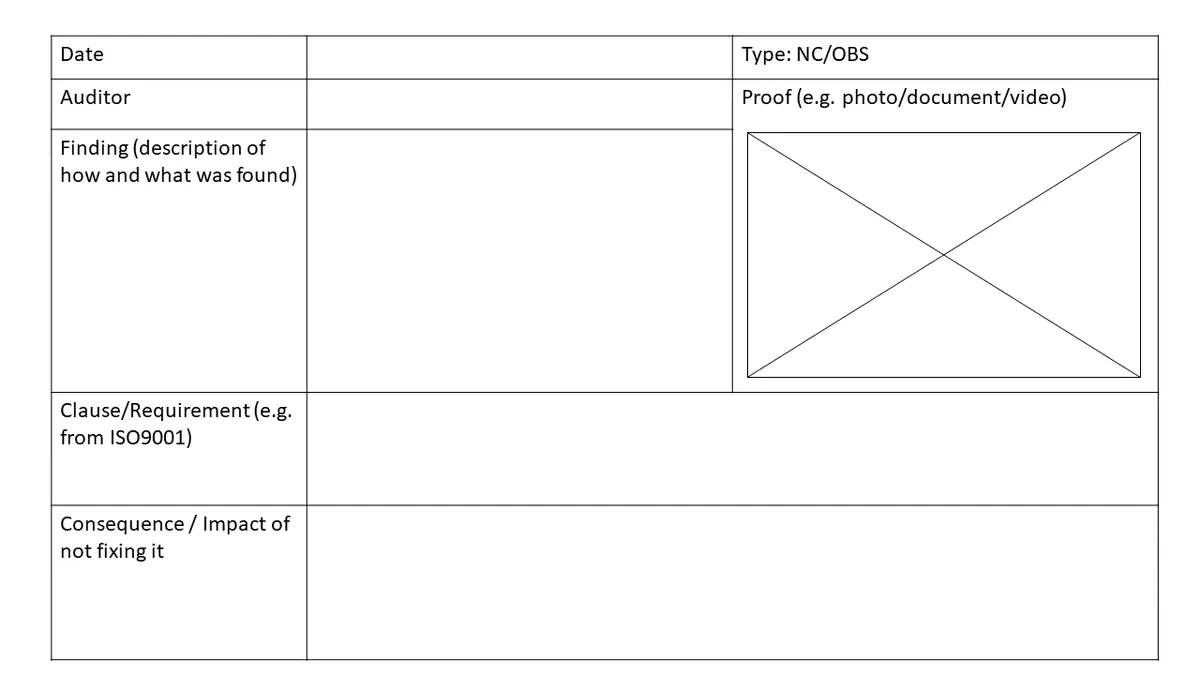
- Document findings immediately with a photo or if not allowed then ask an employee to take photo as a proof of the finding.
- Remember that the audit is sample-based. No need to demand to show everything. Only what is in scope and fits into the schedule.
- If there are strong doubts about certain observations, it is either need to be dropped and not presented to the auditee or shared off the report.
- Before the audit, ensure you define where documented evidence is mandatory and where not. That would be the priority to check.
- Make sure observers have a place to write their observations during the audit (e.g. OneNote or MS Teams chat)
- Make sure everyone in the team writes down their impressions on how the audit was conducted and proposes improvements (lessons learned).
Transparency gives trust
- Make sure you do a short presentation with findings at the end of each audit day. This way you will resolve disputes faster and avoid any misunderstanding at the final closing meeting of the audit.
- It is better to have smaller and more focused discussions at the end of the day, rather than dropping everything on the last closing meeting. When I applied this approach, by the final closing meeting, we had almost nothing to resolve, it was done in 30 minutes and with a good farewell mood.
- Use a PowerPoint template slide for each finding and use 1 hour of internal discussion at the end of the audit day to quickly put findings.
- Slides from each audit day will contribute to the final closing meeting slide. Finally, these slides with documented findings will be then used as input for a more formal report. This way you save time and can release your presentation slides and report faster.
- Pay special attention to explaining "Consequences". Why follow the rules if they do not make sense? For the sake of being compliant? It is more important to understand the direct consequences of not fixing the finding such as quality deterioration, safety compromise or financial and reputational losses. That way you will have less chance of having disputes over findings.
You are nothing less than diplomats
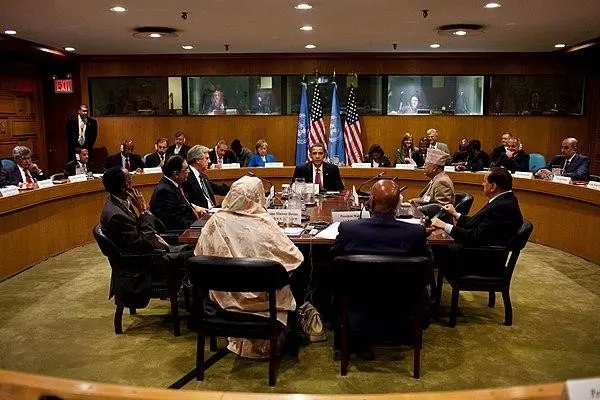
- Smile and be friendly. Be serious when the auditee wants you to be serious.
- Repeat the purpose of the audit every time you meet a new member of the auditee team. The purpose of every audit is to improve business. Communicate clearly to auditees from the beginning and then many times during the audit, that you are doing the audit to suggest improvements. This way you align with auditees and ensure they cooperate well with you.
- If you do an audit of one company as a representative of another company, such as I did in the case of Ericsson and Jabil, then you need to keep in mind that you are also acting as a brand ambassador.
- Leave time for small talk in between sessions / during breaks
- Find positive observations every day and share them immediately. Do not forget to include them in presentations and final report.
- Modulate voice in the form of late-night radio DJ (as Chris Voss puts in his book "Never Split the Difference"). In other words, the way you speak should sound confident yet not intimidating.
- Notify and repeat to auditees, that you need to follow the schedule and might be rushing or cutting them. That way you make sure that you manage to follow your schedule without being rude.
- If you are invited for a dinner by auditees, do it only at the end of the audit or when most of it is done, and when there are no major disputes arising during the audit.
Closing nicely but controlling tightly
- Remember not to intervene in the Root Cause Analysis (RCA) and Corrective Action Plan (CAP) process. You might recommend something, but off record. This is the responsibility of the auditee.
- Agree on clear due dates for RCA and implementation of the corrective action plan. Before making a corrective action plan, make sure to check that RCA is properly done.
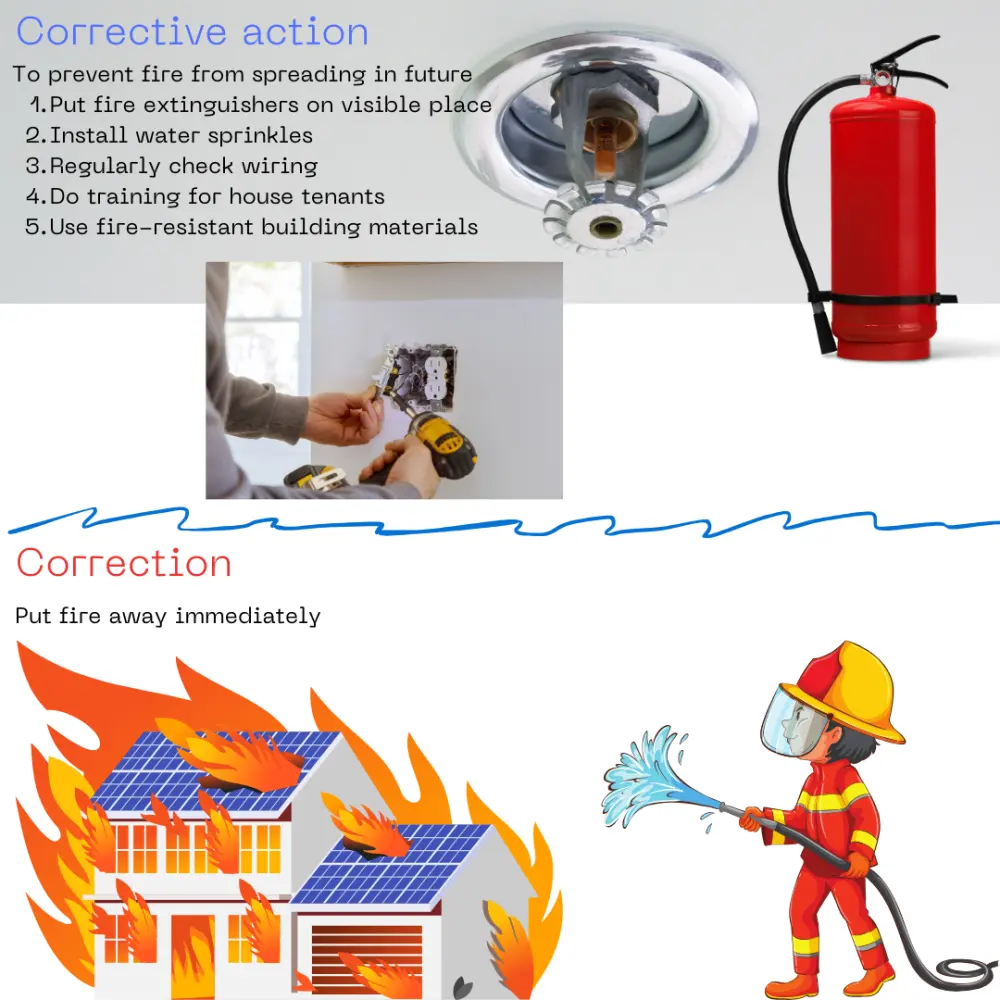
- One of the common mistakes is to confuse corrective actions with corrections.
Quote of the day
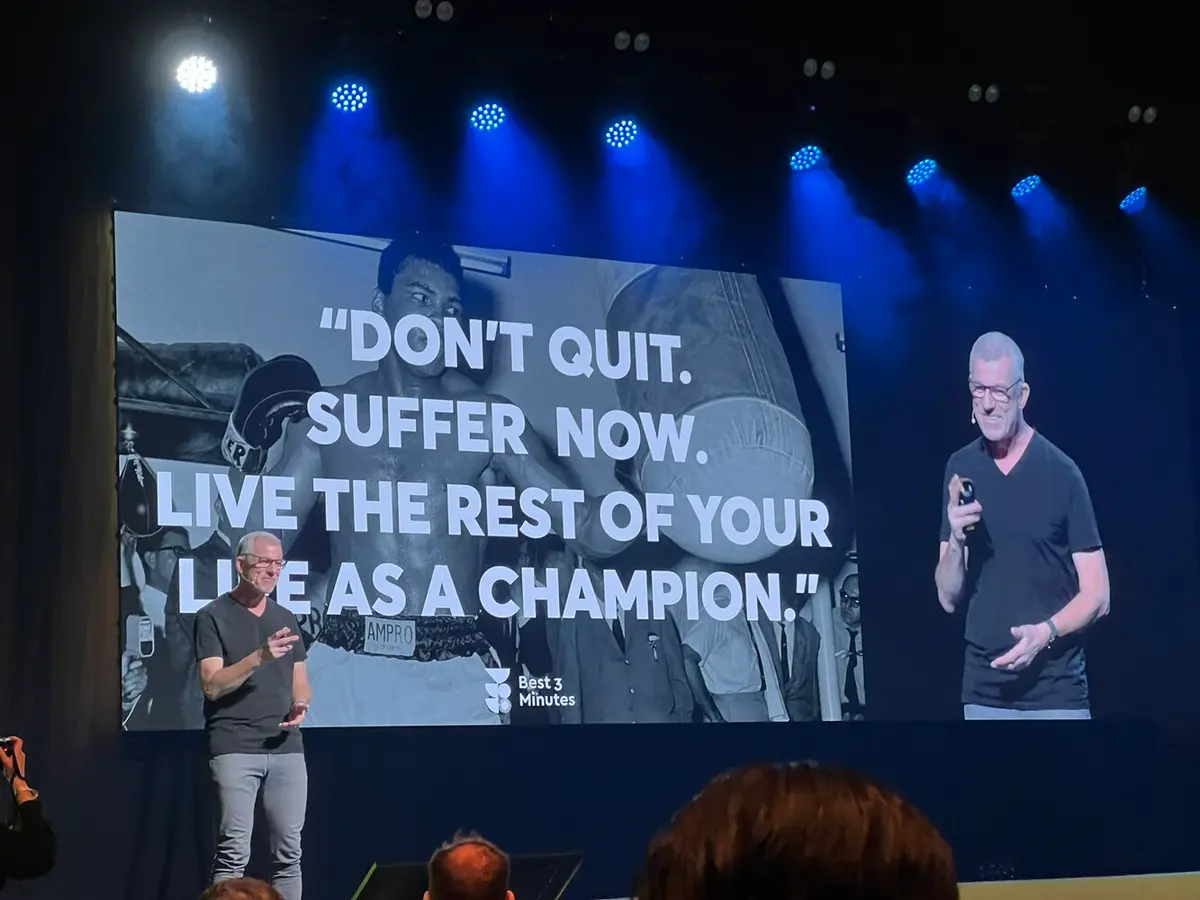
I took the photo with this quote during the presentation by David Beckett at the sTARTUp Tartu 2024.
I guess it is about me and many other startup founders. Yes, I am solving societal problems and disrupting them with my innovations. But I also do it to be free and as Muhammad Ali puts it "live as a champion". That means not living from salary to salary, getting loans to buy a house and car, being restricted in travelling and having just up to 8% of the year for vacation.
How do you get out of it? You figure out problems and solutions that are scalable (e.g. digital products) and launch a startup. And then you do as Muhammad Ali.
Sounds like I achieved all that. Not yet. Let's see how far I manage to go.
Latest publications
- I have founded Moon Consulting . Here is a post with that announcement:
- My New Year Eve wishes:
- TOP 5 episodes of Leaders & Engineers by views in 2023:
- TOP 5 publications by views in 2023:
- One of my thoughts of the day:
- Re-post of a post about my trip to Startup Days 2024 in Tartu with Profibook startup:
Latest episodes of Leaders & Engineers
L&E E14: Elizaveta Lebedeva - Data Science | Machine Learning
An expert in data science, machine learning, economics, and business analytics. She is a BSc cum laude in Finance and Credit, MSc cum laude in Quantitative Economics with about 10 years of experience in data science, economics and business analytics.
Available on YouTube & Spotify.
L&E E15: Dr. Andris Slavinskis - Space Technology | Physics
An expert in space technology, physics and computer science. He is a BSc and MSc in Computer Science, and PhD in Physics with more than 12 years of experience in space technology and deep space missions to asteroids and comets.
Available on YouTube & Spotify.
L&E E16: Dr. Collins Burton Mwakwata - Telecommunications | IoT
An expert in telecommunications engineering, 5G , radiofrequency (RF) testing and communications for the Internet of Things (IoT). He is a BSc and MSc in Telecommunications and Network Engineering, Bachelor of Business Administration (B.B.A.), PhD in Telecommunications with more than 12 years of experience in telecommunications, 5G, IoT and management.
Available on YouTube & Spotify.
Thank you! Share with me your thoughts or impressions that you got after reading today's newsletter.
Yours not yours,
Nodirkhon aka Nodir