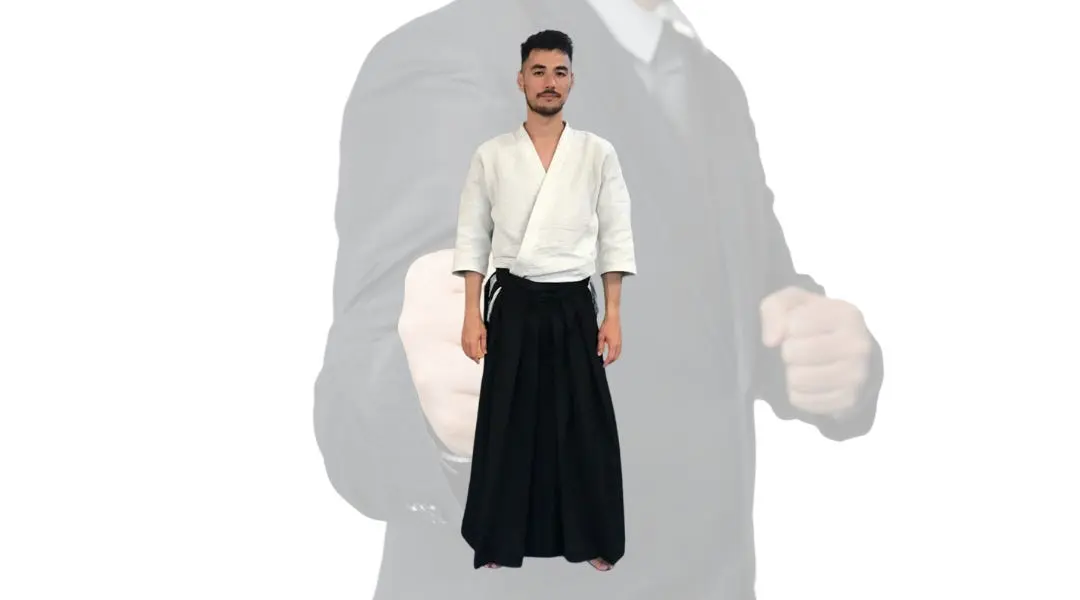
About 2 weeks ago I received a black belt in Aikido. I went through the exam at the Estonian Academy of Security Sciences to get it. The 1st Dan was awarded to several people including me by the Yukimitsu Kobayashi Shihan (7-dan). He came to Tallinn all the way from Tokyo where besides exam he gave a seminar for Aikido practitioners.
How Aikido can be applied in leadership and conflict resolution?
I have been doing Aikido for about 20 years and learned to apply it not only for self-defence but for resolving crisis situations and improving my leadership. Today I will share with you more about it and explain how, although there is still a lot for me to learn.
What is Aikido
Aikido is a Japanese martial art founded in the 1920s by Morihei Ueshiba who is commonly referred among Aikidokas as O'Sensei (大先生 meaning Great Teacher). Aikido as a name was adopted later in 1942 and means "Art of Peace".
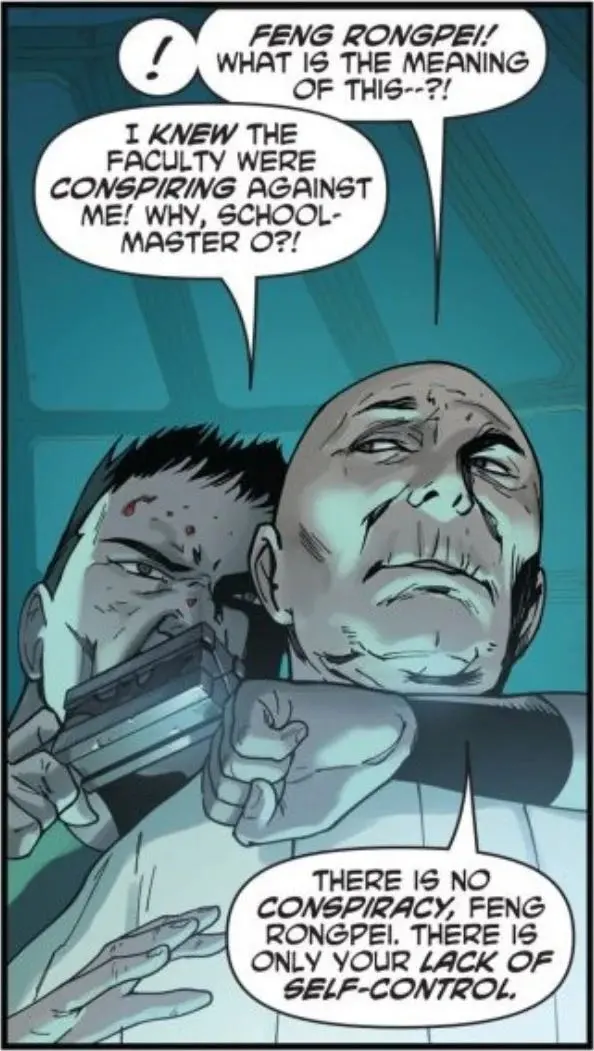
However, I came to know recently about the existence of another O'Sensei from the DC Universe comics featured for the first time in the Richard Dragon Kung Fu Fighter #1. He is defined there as "a legendary martial arts instructor".
Aikido can be applied only for self-defence and it is not a sport since there are no competitions.
O'Sensei also used to refer to Aikido as a manifestation of Love 💗. You might wonder how martial art can be so. Keep reading and you will get to know 😉.
The Art of Peace (Aikido) does not rely on weapons or brute force to succeed; instead we put ourselves in tune with the universe, maintain peace in our own realms, nurture life, and prevent death and destruction. The true meaning of the term samurai is one who serves and adheres to the power of love.
Morihei Ueshiba (translated from Japanese by John Stevens)
How Aikido works
In Aikido, the attacker almost always finishes the attack 👊. However, it is made sure that attack is done to void and none is injured. This is achieved by the following 3 steps:
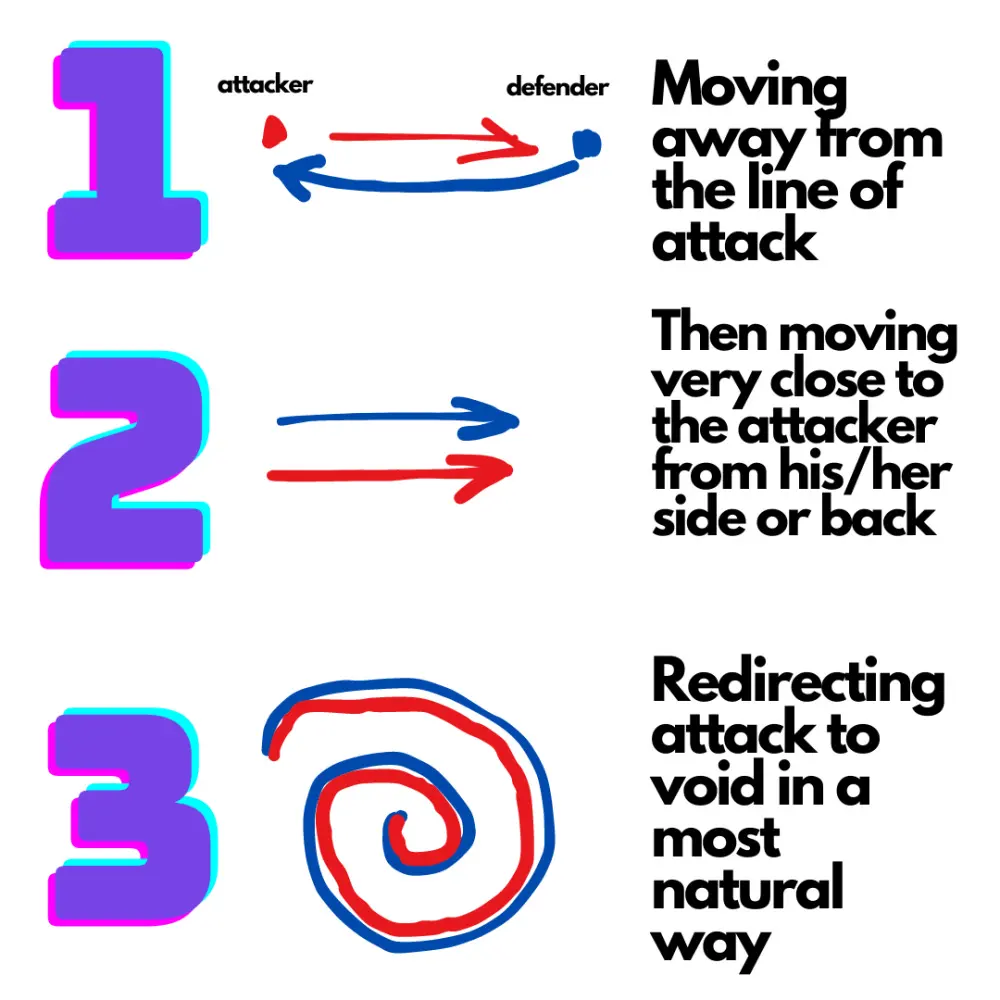
Moving away from the line of attack.
Then moving very close to the attacker from his/her side or back to face one direction. The direction of attack.
Redirecting attack to void in a most natural way (according to the law of physics).
Unlike many other martial arts, the attack is not blocked or confronted. After several such attacks, the attacker gets exhausted and that way aggression goes away and the person is pacified. That is one of the ways to express love.
Noteworthy is that defender uses the momentum of attack and only gives small impulses to impact direction. It is Newton's Law's implementation in a pure form. There is a lot of use of centripetal and centrifugal forces 🌀 also.
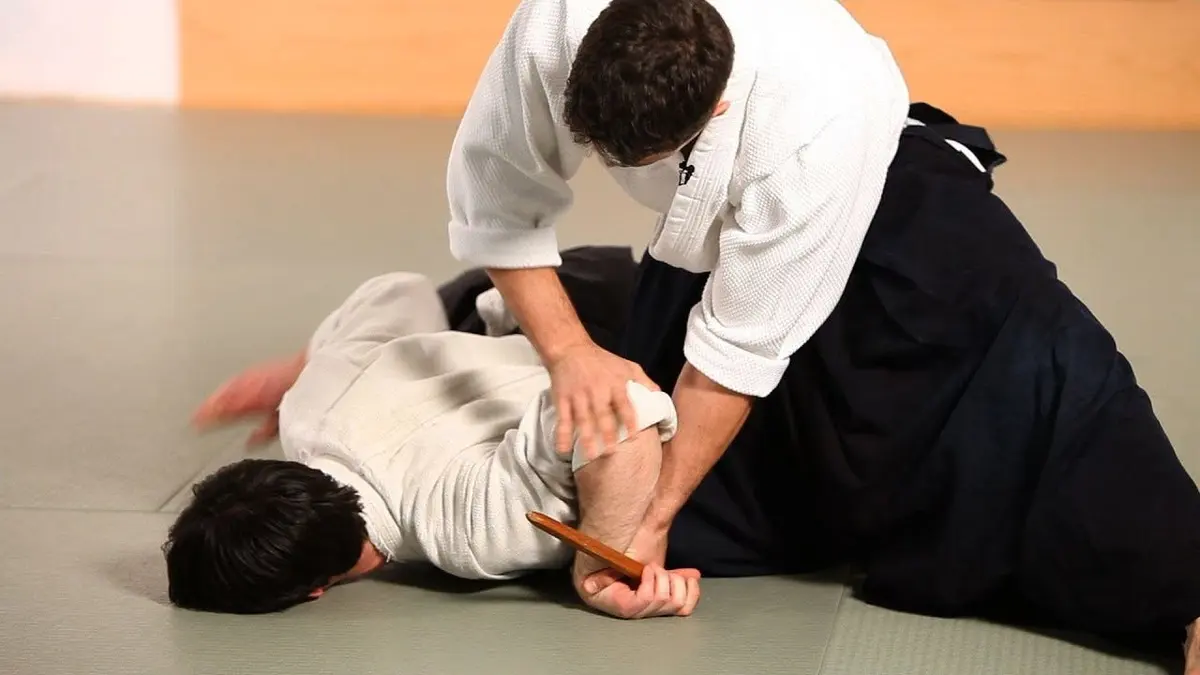
Most of us have moments of aggression when we want to kick or shout 😡. Usually, when we get a chance to do so and do, we feel better and we are not aggressive anymore 😇.
On the other hand, if you constantly block the attack, the aggression builds up as the attacker was not able to release energy, and you yourself become aggressive too. That also takes a lot of energy from the attacker and defender.
In the Art of Peace (Aikido) we never attack. An attack is proof that one is out of control. Never run away from any kind of challenge, but do not try to suppress or control an opponent unnaturally. Let attackers come any way they like and then blend with them. Never chase after opponents. Redirect each attack and get firmly behind it.
Morihei Ueshiba (translated from Japanese by John Stevens)
Example with the punch attack
Let's watch the video of one Aikido technique to understand better the principles I explained above. In this video, the great-grandson of the Aikido founder (Mitsuteru Ueshiba), demonstrates how to deal with a punch (tsuki) and perform a control called "kote-gaeshi".
Aikido is very dynamic in nature and thus, might seem a bit unrealistic if you watch it the first time. But if you watch carefully and think about how such physics elements as the centre of mass, linear and angular momentum, and centripetal and centrifugal forces are applied to each move, you will understand better. Even better if you try it yourself. You know that so far I have only recommended good things. Right 😉?
In the 58th second, the defender moved out of the line of attack and aligned himself slightly behind while facing the same direction as the attacker.
Then at 1:09, he uses the right leg of the attacker as the centre of the circle and the right arm as a lever to create angular momentum and rotate the attacker by 180 degrees.
Then at 1:14, the defender uses the power of angular momentum to bring the attacker down.
By 1:30 he fully neutralizes the attacker by applying control. That way the attacker is fully grounded and the energy potential for the next attack is at a minimum.
To injure an opponent is to injure yourself. To control aggression without inflicting injury is the Art of Peace (Aikido).
Morihei Ueshiba (translated from Japanese by John Stevens)
Psychological Aikido
Now you might ask me "Yeah, but how does it apply to leadership or conflict resolution?". In the same way, as I explained above for a physical attack, these Aikido principles can be applied to verbal or psychological attacks.
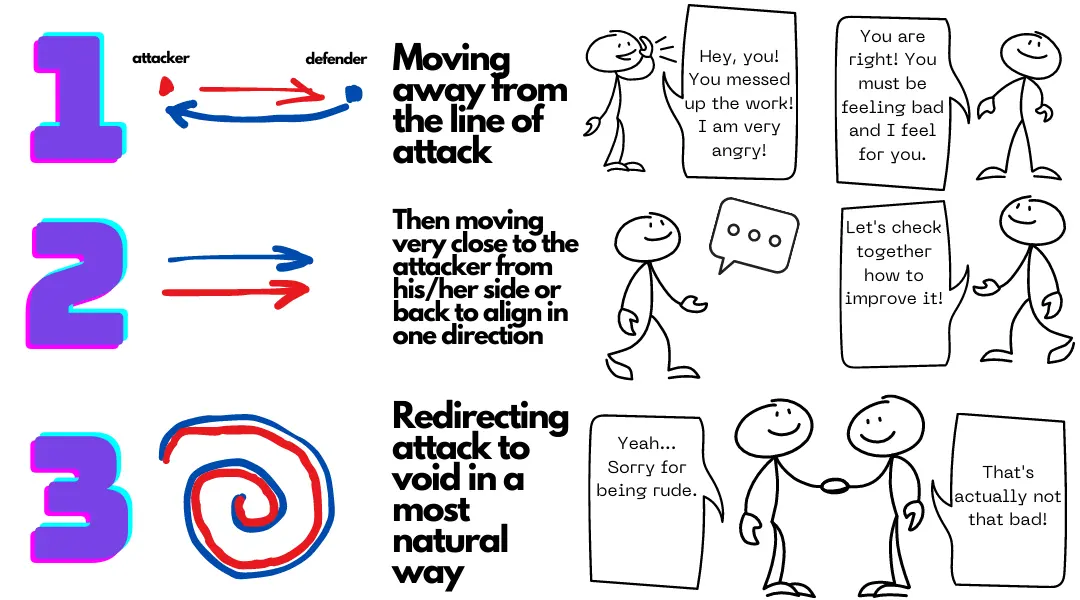
There are no losers or winners in Aikido. The same applies when applying psychological Aikido at work or with family and friends. It is not about manipulating the other side. It is about active listening, empathy and love. We all have bad times sometimes.
Help to quickly release aggression or bad emotions of your colleague instead of blocking them. After that, there might be nothing to resolve in essence and that was just an emotion. But, if, for instance, the quality of work indeed suffered, then after letting emotions out, there is room for looking together a solution in an easy and joyful way.
The first to mention the term "Psychological Aikido" was Dr Mihhail Litvak, a famous psychotherapist and an author of more than 30 books in the field of psychology and psychotherapy. He published his book "Psychological Aikido" in 1992 while the English version was released in 2001.
I highly recommend reading it. Here I am sharing more of my experience and understanding and in no way summarizing the book written by Dr Litvak.
Contemplate the workings of this world, listen to the words of the wise, and take all that is good as your own. With this as your base, open your own door to truth. Do not overlook the truth that is right before you. Study how water flows in a valley stream, smoothly and freely between the rocks. Also learn from holy books and wise people. Everything - even mountains, rivers, plants and trees - should be your teacher.
Morihei Ueshiba (translated from Japanese by John Stevens)
Domo arigatō gozaimashita!
Yours, Nodirkhon.